AI audiovisual production
How to choose an AI audiovisual production company: 8 key questions
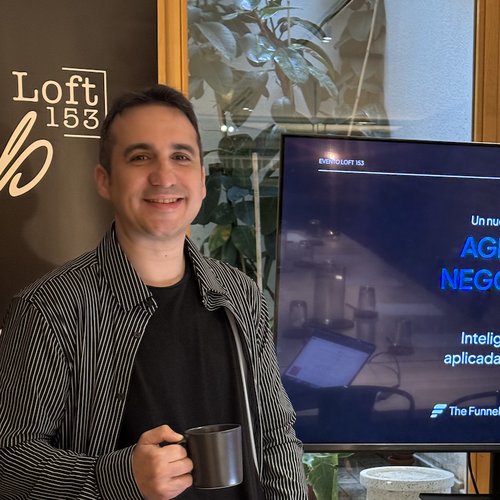
Audiovisual technician · Founder of Brainstorming Films · AI consultant

Looking for an AI audiovisual production company in 2026 means entering a market where everyone promises the same thing: speed, savings, cinematic quality. The words repeat in every proposal until losing meaning. The real difference between providers isn't seen in their websites or their reels. It's discovered by asking concrete questions.
These are the eight that come closest to what actually matters when a company is going to invest in an audiovisual production with artificial intelligence. They're not trick questions: they're the ones a good team will answer quickly and an improvised team will dodge.
1. Who directs the project and what experience do they have beyond AI?
Artificial intelligence is a new tool. Audiovisual direction is not. A production company that puts AI at the center of its discourse but doesn't have someone with craft behind it —direction, scripting, real editing— is selling tool, not result.
What you want to know: who is the person deciding what your piece tells and why. Their name, their background, their craft. If the answer is vague —"our creative team", "we work with several directors", "we have a system"—, there's no direction. There's clip production.
2. What are the process steps before generating the first image?
A good audiovisual production follows a non-negotiable order: strategy, concept, script, storyboard. Only after comes AI generation, editing and delivery.
What you want to hear: a clear sequence of steps with identifiable deliverables in each one. Written strategy. Approved concept. Validated script. Visualized storyboard. If the proposal jumps directly to "we'll generate some pieces so you can see options", there's no process. There's improvisation.
A detail that distinguishes: ask for the storyboard. A production company that works with craft shows it as part of the project, not as an extra. If it's never mentioned, worth insisting.
3. How is visual coherence ensured between pieces and shots?
Generative models tend to inconsistency. Each generation is an independent event: if there's no explicit art direction —palette, lens, light, ratio, criteria—, shots don't fit together.
What you want to hear: how they fix art direction before generating and how they maintain it in every iteration. A bible of references, versioned prompts, visual validation between stages. If the answer is "we tune it during generation", what you'll receive is a mosaic of pretty clips without a common world.
4. How much time goes to strategy and editing vs generation?
Here's one of the most common traps. A production company that dedicates 80% of the project to generating clips and 20% to strategy and editing probably delivers a piece that looks almost professional but doesn't quite convince.
What you want to hear: a distribution that privileges the thinking and post-production phases. In well-made projects, AI generation usually takes less time than its weight in the result. Strategy and editing are where it's decided whether the piece works.
As a mental reference: if they say "we have it ready in three days", they probably skipped strategy. If they say "we have it ready in six months", they probably don't know how to organize the flow. The reasonable range is usually between two and eight weeks depending on scope.
5. Do they work with a defined team or do they subcontract freelancers without context?
There are production companies that are, in reality, one person with a freelancer network that changes by project. This isn't bad in itself, but it has an implication: direction gets fragmented. Each freelancer interprets the brief from their own context.
What you want to know: who will be in each phase and if those people have worked together before. A team with shared history has a huge shortcut: shared craft. A team assembled for the project is learning to work together while producing your piece.
6. How do they propose to measure the piece's result?
A production company that only delivers the final file and steps away from performance is selling you footage, not business. The video isn't done at export: it's done when it produces the commercial effect that was set at the beginning.
What you want to hear: a metrics proposal aligned with the piece's objective. Useful watch time, immediate subsequent conversion, quality of the conversations it generates with the sales team, brand memory. Not "views" and "engagement".
If the initial proposal doesn't mention how it will be measured, ask. A production company with craft should have a clear answer, even if modest. One that evades the topic only commits to producing, not to result.
7. How do they deliver? Do they adapt by channel or deliver a single cut?
A modern audiovisual piece almost never lives in a single place. The home, a service landing, a social campaign, an email to clients, a sales presentation: each needs a different version. Not just a trimmed one: one designed for that use.
What you want to hear: a delivery segmented by final use, with variants of duration, ratio and, in some cases, edit. A production company that delivers a single "master" file leaves all the adaptation work in the client's hands, and that work usually gets done poorly because there's no continuity of direction.
8. What happens when the project goes outside the brief?
Every project goes outside the brief at some point. The client changes a decision, a new opportunity appears, the first delivery generates ideas that weren't anticipated. The question isn't whether it will happen, but how it gets handled when it does.
What you want to hear: an explicit process to manage changes without destroying the result. An early conversation about scope, a mechanism to incorporate adjustments, criteria to decide which changes improve the piece and which break it.
A production company that says "whatever you ask, we do it" isn't collaborating: it's obeying. And obedience is the worst form of relationship with a creative supplier. What you need is someone who knows how to say "this I do, this I don't, and this is the reason".
An optional but useful ninth question
If after the eight you're still torn between two options, there's a question that closes: what projects did you turn down in the last year and why?
A production company with craft turns down projects. It does it when the client doesn't have strategy, when the brief asks for something the company can't defend, when timelines make quality impossible. The ability to refuse is a sign of craft. If the answer is "we accept all projects that come in", you already have information.
What not to ask (or not at the beginning)
Some questions seem relevant but rarely are early on:
- "What AI tool do you use?" Tools change every month. What matters is the process, not the model.
- "Do you have a template for our sector?" If they have one, doubt. Your company's narrative shouldn't be resolved with a template.
- "How many pieces do you produce a month?" Volume isn't a quality indicator. A production company that produces few with craft is usually a better choice than a content factory.
Closing
Choosing an AI audiovisual production company is choosing how your company will look when someone decides whether to trust it. The eight questions above don't aim to filter by price or size: they aim to filter by craft. Craft isn't bought with budget nor delegated to a model. It's brought by a team with craft.
If you want to see how we answer these same questions, you can review the Brainstorming Films Method, meet the director and founder, or read how we work the frequent AI storytelling mistakes that a good team prevents If you want to see how it all fits, explore the full AI audiovisual production studio.
We reduce structure. We don't reduce craft.
About the author
Audiovisual technician · Founder of Brainstorming Films · AI consultant
Directs AI-powered audiovisual production for B2B brands. After years in traditional production, he founded Brainstorming Films as an AI-native studio: human direction and scriptwriting, modern-tool execution.
More about Gonzalo →