AI audiovisual production
Brand storytelling with AI: 7 mistakes that destroy the message
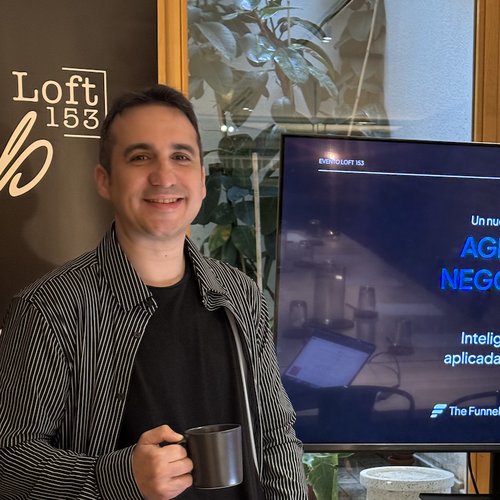
Audiovisual technician · Founder of Brainstorming Films · AI consultant
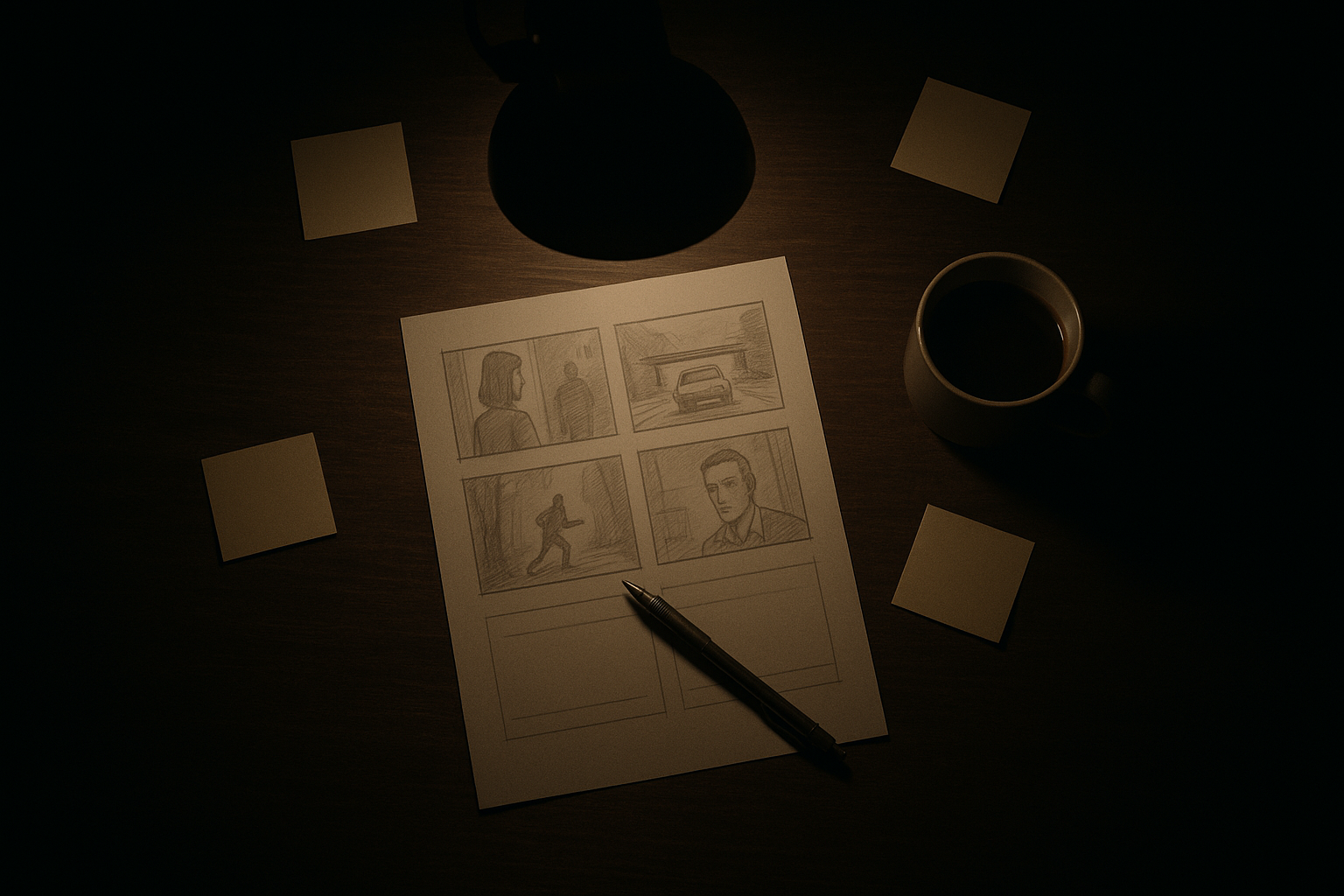
Brand storytelling with AI doesn't fail because of the technology. It fails because of the decisions made before touching the technology. When a piece with artificial intelligence comes out wrong, it's almost always because someone skipped a decision that couldn't be skipped.
These are the seven mistakes we see repeated when a company, an agency or a brand decides to produce storytelling with AI without a process behind it. Each has a clear pattern and, in most cases, a simple remedy if detected in time.
Mistake 1: Starting with the tool, not the message
The symptom: the conversation starts with "which tool do you use, Sora or Runway?" instead of "what do we need to communicate?".
The problem: when a piece is born by choosing a tool before defining message, the tool conditions the story. The company ends up telling what AI does well, not what the brand needs to say.
The remedy: don't open any model until you have written, in a single sentence, what decision we want to move in whom. If that sentence doesn't exist, no tool will save the piece.
Mistake 2: Confusing aesthetics with narrative
The symptom: the initial proposal is "we'll do it in this style: cinematic, dreams, retro 80s, anime". The conversation starts with appearance.
The problem: aesthetics without narrative is decoration. A piece can look impeccable and tell absolutely nothing. AI makes this more frequent, because generating well-finished images is trivial; building meaning is not.
The remedy: when someone proposes a visual style before an argument, return the question. What story are we telling? Why does this aesthetic tell it better than another? Aesthetics should be a consequence of a narrative decision, not its substitute.
Mistake 3: Asking for variants instead of asking for decisions
The symptom: when something doesn't quite convince, the automatic response is "let's generate another version". And another. And another.
The problem: AI allows generating variants at almost zero cost. That's an advantage when you know what to look for and a trap when you don't. Brands that fall into the variant loop aren't iterating: they're postponing decisions. The result is a hundred mediocre pieces instead of one good one.
The remedy: limit the number of iterations per stage and force the decision. Good direction knows when to stop. The quantity of options doesn't improve a bad strategy; it disguises it.
Mistake 4: Not fixing art direction before generating
The symptom: every shot in the piece has different light, different palette, framing that breaks the previous one's logic. The piece looks like a mosaic.
The problem: generative models tend to inconsistency. Each generation is an independent event. If there's no explicit art direction beforehand —references, palette, lens, ratio, light criteria—, the piece has no visual world. It has loose clips.
The remedy: before generating anything, define art direction as if for a real shoot. A bible of references. A limited palette. Clear rules about what's in and what's out. That bible is used in every prompt, every iteration, every validation between stages.
Mistake 5: Treating AI as a shortcut, not as a team's tool
The symptom: a single person, with a good idea, tries to produce the entire piece in an afternoon with a couple of models open in tabs.
The problem: AI accelerates execution. It doesn't replace the team's functions. A director, an editor, a color technician, a sound designer, a writer —each brings craft to their layer—. When one person tries to cover them all with AI's help, some layer collapses. The one that collapses is usually professional editing.
The remedy: AI frees up time. That time is invested in improving each layer, not in eliminating layers. If the workflow doesn't have an editor, a color technician and a sound designer (even if it's the same person at different moments), the piece reaches delivery with the worst possible problem: it looks almost professional.
Mistake 6: Generating content that pretends to be something else
The symptom: simulated testimonials with people who don't exist, generated "client cases", b-roll of invented offices, fictional founders.
The problem: AI can generate images that look real. That doesn't mean it should. A brand that uses AI to fake authenticity is building a narrative on sand. The day it gets discovered —and it gets discovered—, the reputational cost is enormous.
The remedy: the rule is simple. What is metaphor, evocation, conceptual world or illustration, can be generated. What pretends to be document —testimonials, real tours, product demonstrations, specific people— needs to actually be. AI is an excellent evocation tool and a terrible imposture tool.
Mistake 7: Skipping professional editing because "the clips are ready"
The symptom: the piece is delivered as a concatenation of generated clips, with obvious cuts, no color work, generic stock audio, no built rhythm.
The problem: AI clips are raw material, not finished pieces. Professional editing is the stage where a collection of shots becomes a story with rhythm, coherent color, careful sound and a clear emotional architecture. Skipping this stage is like delivering a film without the cut.
The remedy: treat AI output the way we treat cameras: it produces footage. Final narrative lives in post-production. In our process, this step happens in DaVinci Resolve and usually takes more time than generation itself. That's not inefficient: it's the difference between a video and a piece.
The question that prevents all seven
There's one question that, posed at the beginning of any AI storytelling project, prevents the previous seven mistakes:
What decision do we want to move, in whom, and with what underlying emotion?
That question forces thinking first about message (Mistake 1), narrative (Mistake 2), destination (Mistake 3), the visual world that holds the emotion (Mistake 4), the team needed to sustain everything (Mistake 5), what kind of image serves and which doesn't (Mistake 6) and the rhythm the piece needs (Mistake 7).
It's an uncomfortable question, because it demands a concrete answer. But that discomfort is exactly what separates a piece that works from a piece that passes.
Closing
Brand storytelling with artificial intelligence can produce exceptional pieces. It does so when the process is respected: thinking before generating, directing before delegating, deciding before iterating. The seven mistakes above are seven ways to skip one of those steps. The good news is that all of them are prevented with a well-planned initial conversation.
If you're interested in going deeper into how we apply this approach to real productions, you can know the Brainstorming Films Method applied to AI Videos, or read about why AI amplifies direction instead of replacing it.
We reduce structure. We don't reduce craft.
About the author
Audiovisual technician · Founder of Brainstorming Films · AI consultant
Directs AI-powered audiovisual production for B2B brands. After years in traditional production, he founded Brainstorming Films as an AI-native studio: human direction and scriptwriting, modern-tool execution.
More about Gonzalo →