
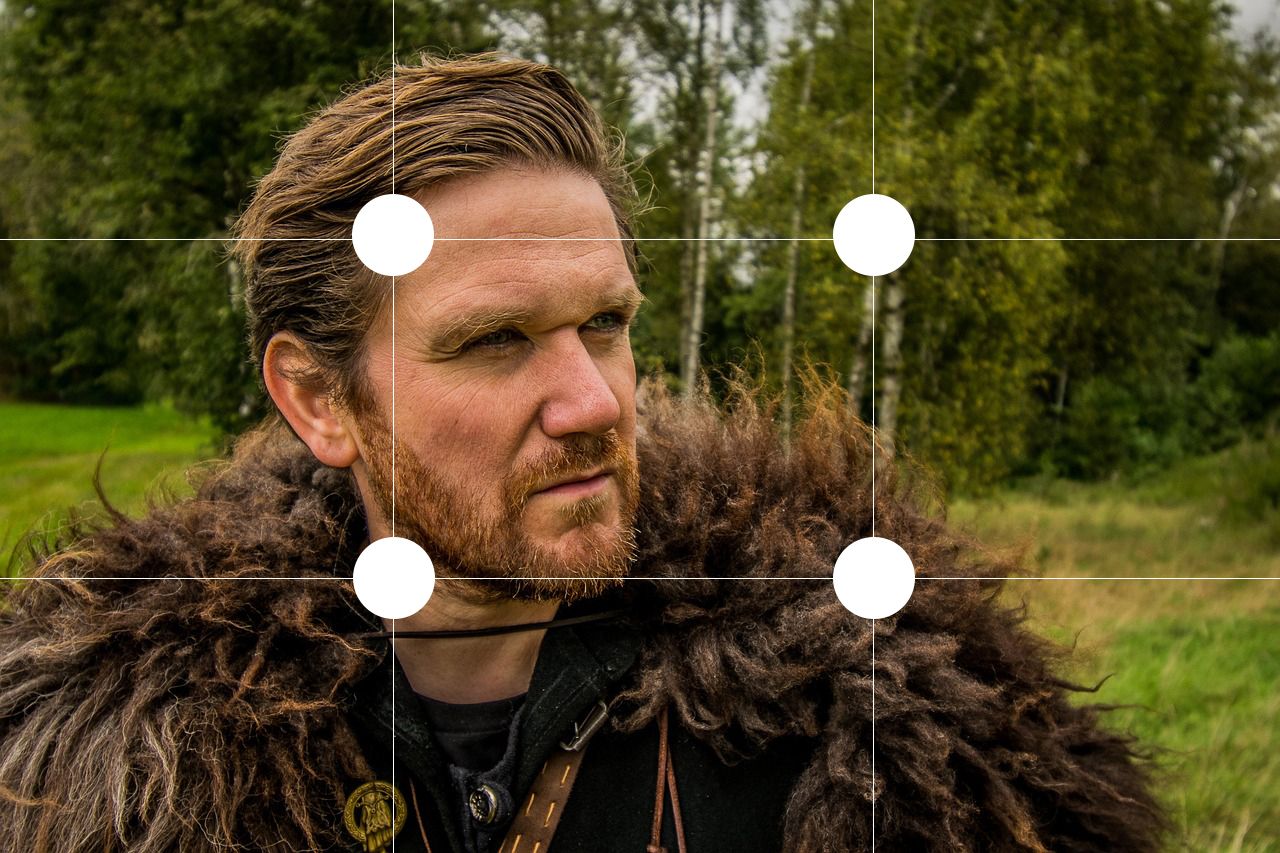
In this article, complementary to the ebook we have for sale and the workshop, you will learn the rule of thirds and the types of shots that can be used in video to achieve good image composition.
Image composition in video
Image composition is one of the foundations of cinematic language. When we take recordings, we not only have to make them look nice, but we must also achieve a correct composition that allows us to highlight what we want in the image, give importance to our subject, and correctly convey the message we want the viewer to see on the screen.
Rule of thirds
In this article, we are going to look at the rule of thirds, its importance, and examples to see its correct usage. This rule divides the image into 9 parts: two (imaginary) vertical lines and two horizontal lines. Their intersections form 4 strong points where we should place the person or object we want to highlight.
Next, we will look at a video that I found on YouTube where the strong points can clearly be determined, where directors place the character within them to highlight its importance.
Video obtained on YouTube from the channel: little_rh
Types of shots in film
Once we know exactly where we need to place the character in our frame, we must know what types of shots we are going to use. This is where we can convey sensations to the viewer and make them feel what we are looking for.
Let’s look at the types of shots that exist in film:
- Wide shots: they provide us with a broad view of what is in front of us, allowing us to describe situations. Conversely, details are lost.
- Close shots: these are used to detail a person or object. Care must be taken not to rely solely on this type of shot, as the viewer may become disoriented without the context provided by wide shots.
The best way to understand what has been explained is with the following video, the best example I can show you from a great film that has moved us all: "The Pursuit of Happyness". Specifically, we will see a scene that starts with very wide shots where we see the city in the background and them on a terrace: describing, on one hand, where they are located (a descriptive shot), and on the other hand, we see how the large city is distancing from them (the shot conveys something narrative). As the video continues, we see how when the father approaches the son and those deep pieces of advice begin, the shots become shorter and shorter. This leads us to visually experience what the characters in the film convey, making us feel emotions and be part of the story.